

How Do You Manage High Cholesterol and High Blood Pressure Together?
At Integra Primary Care, our dedicated providers work closely with you to monitor and manage your cholesterol and blood pressure, helping you reduce your overall risk for cardiovascular disease and related health issues. We’re here to support you every step of the way—because your heart health matters to us. For more information, contact us or schedule an appointment online. We are conveniently located at 95 Washington St, Ste 204 B, Canton, MA 02021.
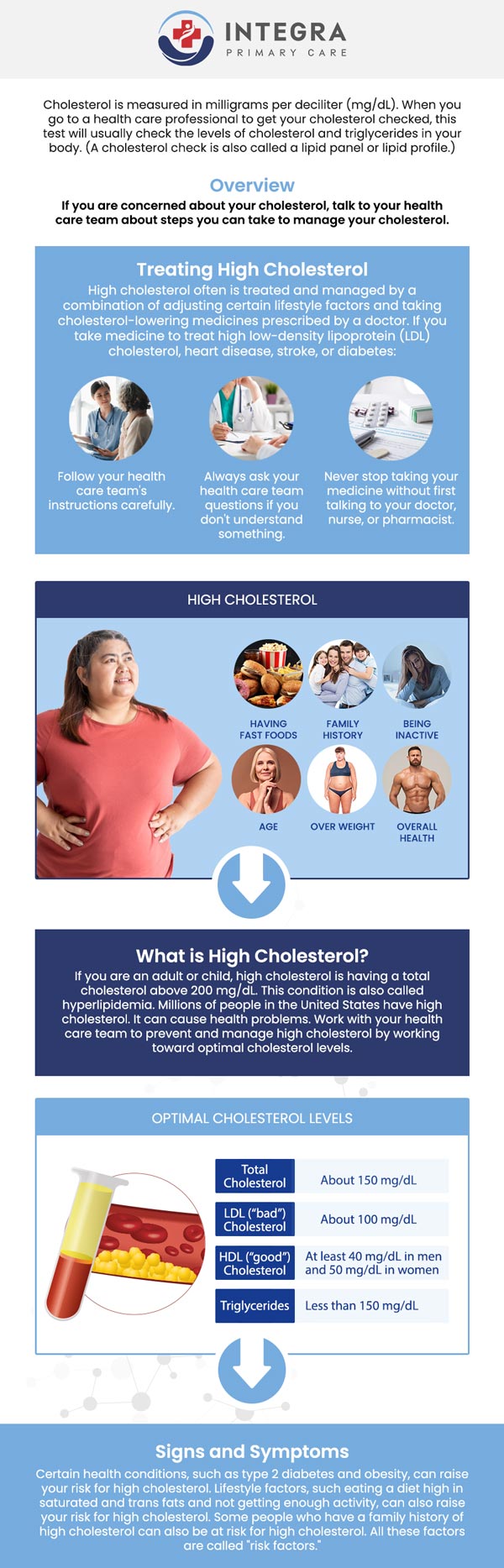
Table of Contents:
What are the risks of having both high cholesterol and high blood pressure at the same time?
How often should you monitor cholesterol and blood pressure levels when managing both conditions?
What are the recommended target levels for cholesterol and blood pressure when managing both?
Can controlling high cholesterol and blood pressure together reduce the risk of heart disease?
How Does Shahid Ali, MD at Integra Primary Care Treat Concurrent Hypertension and High Cholesterol?
At Integra Primary Care, we know that managing your heart health is about more than just treating one risk factor. Having both high cholesterol and high blood pressure at the same time greatly increases the risk to your heart and overall well-being. When cholesterol levels are elevated, fatty deposits can accumulate in your blood vessels, causing them to narrow and making it harder for blood to flow. At the same time, high blood pressure puts extra strain on those same vessels, increasing the risk of damage or stiffening.
This combination means your heart has to work even harder to pump blood, raising your risk of serious problems such as heart attacks and strokes. It can also increase your chances of developing peripheral artery disease, which affects blood flow to your arms and legs. Over time, the added pressure and damage may lead to heart failure, kidney disease, or even vision issues. Together, high cholesterol and high blood pressure speed up the hardening and narrowing of the arteries—a process called atherosclerosis—which can progress much faster when both conditions are present.
We also understand that managing two chronic conditions can be challenging, both physically and emotionally. It often requires a combination of lifestyle changes and medications, and without proper management, the risk of complications, disability, or a shortened lifespan goes up.
Regular monitoring is crucial when managing high cholesterol and high blood pressure. Consistent check-ups help prevent complications and ensure your treatment plan is effective and tailored to your unique health needs.
For most adults with stable cholesterol levels and low risk factors, our team typically recommends checking cholesterol every four to six years. However, if you have additional risk factors—such as diabetes, a history of heart disease, or recent changes in medication—we may recommend more frequent cholesterol checks, sometimes annually or even more often, to closely monitor your progress.
Blood pressure requires even more regular attention. During your visits, we assess your blood pressure at least once a year if you are at low risk and your readings are within the normal range. If you are actively managing hypertension, we may ask you to monitor your blood pressure at home several times a week or even daily, especially after changes in medication.
At Integra Primary Care, we individualize the frequency of monitoring for both cholesterol and blood pressure based on your personal health status, risk factors, and how you respond to treatment. We encourage you to communicate any changes in your health or medications with us, so we can adjust your monitoring schedule as needed.
Regular monitoring allows us to detect changes early and make timely adjustments to your treatment plan—reducing your risk of heart attack, stroke, and other serious complications.
Managing both cholesterol and blood pressure is essential for reducing the risk of cardiovascular disease, and our team works closely with each patient to establish personalized target levels.
For cholesterol management, our providers follow evidence-based guidelines. We generally recommend that low-density lipoprotein (LDL) cholesterol is kept below 100 mg/dL for individuals at moderate risk, and below 70 mg/dL for those at high risk, such as patients with existing heart disease or diabetes. We also aim to keep total cholesterol levels under 200 mg/dL, with high-density lipoprotein (HDL) cholesterol at 40 mg/dL or higher for men, and 50 mg/dL or higher for women. Triglyceride levels should ideally be below 150 mg/dL.
Blood pressure control is also a key part of our approach at Integra Primary Care. In line with current recommendations from the American Heart Association and American College of Cardiology, we typically set a target blood pressure of less than 130/80 mmHg for most adults. However, we recognize that each patient is unique, and we tailor these targets based on age, medical history, and individual cardiovascular risk.
If you are managing both high cholesterol and high blood pressure, the Integra Primary Care team will partner with you to set appropriate goals and monitor your progress. Through regular check-ups, lifestyle counseling, and, when needed, medication management, we strive to help you lower your risk of heart attack, stroke, and related complications.
Absolutely! At Integra Primary Care, we understand how important it is to control both high cholesterol and high blood pressure to protect your heart health. When these two conditions occur together, they can greatly increase your risk of heart disease, heart attacks, and strokes. That’s why our team is dedicated to providing comprehensive care that helps you manage both risk factors effectively.
High cholesterol causes fatty deposits, or plaques, to build up inside your blood vessels, narrowing the arteries that supply blood to your heart. High blood pressure adds extra strain on these blood vessels and forces your heart to work harder, raising your risk of damage to the artery walls. When high cholesterol and high blood pressure are present together, their harmful effects are amplified, making it even more likely for complications to occur.
At Integra Primary Care, we work with you to create a personalized plan that may include lifestyle modifications—such as eating a heart-healthy diet, regular exercise, quitting smoking, and maintaining a healthy weight—as well as medications if necessary. By lowering your cholesterol, we help reduce plaque buildup, and by controlling your blood pressure, we decrease strain on your arteries. This combined approach helps keep your blood vessels healthier and lowers your risk of heart disease.
Managing high blood pressure and high cholesterol simultaneously requires a highly coordinated approach. At Integra Primary Care, board-certified internal medicine physician, Shahid Ali, MD, leverages his intensive international cardiology background to create customized treatment plans for this dual challenge. Rather than treating these conditions in isolation, Dr. Ali looks at your complete cardiovascular profile. His targeted therapeutic strategy combines evidence-based medical interventions—such as tailored prescription medications—with aggressive lifestyle modifications. By optimizing your daily diet, introducing structured exercise, and utilizing advanced diagnostic tracking, Dr. Ali effectively reduces arterial strain, prevents dangerous plaque buildup, and safeguards your long-term heart health.
Regular check-ups at Integra Primary Care allow us to monitor your cholesterol and blood pressure closely and adjust your management plan as needed. Our goal is to partner with you for long-term heart health and well-being. If you have concerns about your cholesterol or blood pressure, visit us today—we’re here to help you every step of the way. For more information, contact us or schedule an appointment online. We are conveniently located at 95 Washington St, Ste 204 B, Canton, MA 02021. We serve patients from Canton MA, Sharon MA, Stoughton MA, Norwood MA, Walpole MA, Randolph MA, Mansfield MA, Dedham MA, and surrounding cities.
Check Out Our 5 Star Reviews


Additional Services You May Need

Additional Services
You May Need
• Annual Physicals
• Wellness Exams
• Medical Weight Loss
• Chronic Disease
• Telehealth
• Sick Visits
• Preventive Care
• Mental Health
• Vaccinations
• Direct Primary Care
• Diabetes
• High Blood Pressure
• Cholesterol
• Asthma
• Minor Injuries
• Men’s Health
• Prostate Screening
• Sexual Health
• Primary Care







 Send Text
 How May I Help You?
